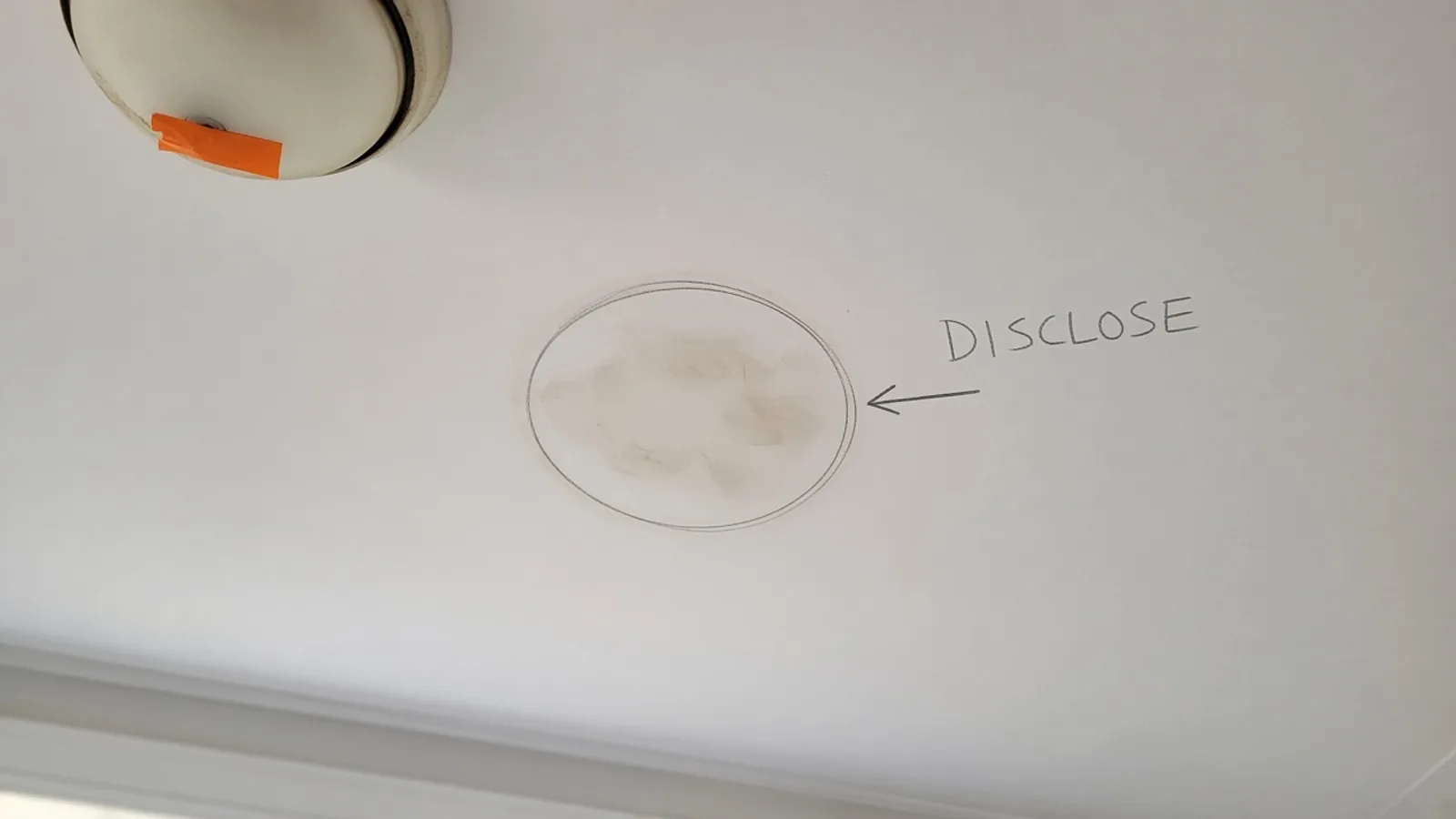
What you have to disclose when you sell your house in California is shorter than most sellers fear. You fill in one main form, you hand over a few notices that depend on where the house is and when it was built, and you follow one rule that covers everything else: you cannot hide what you know.
This is the short list, read from the state's own code and agency pages on November 15, 2026. It is a plain guide, not legal advice. If something on your house is unusual, a California real estate attorney is the person to ask.
Who this applies to
The main law, Civil Code section 1102, covers a sale of single-family residential property. The Department of Real Estate (DRE) describes it as homes of one to four dwelling units. Two things to know up front:
- You cannot waive it. The code says "Any waiver of the requirements of this article is void as against public policy."
- A few sales are exempt. Section 1102.2 lists them, including sales ordered by a court, foreclosure sales, sales between co-owners, and transfers to a spouse or to a parent, child or other direct relative. A trustee or executor selling for a trust or an estate is generally exempt too, unless the trustee is a person who owned or lived in the house within the past year. If you think you are exempt, confirm it before you skip the form.
The one form: the Transfer Disclosure Statement
The core of the job is the Real Estate Transfer Disclosure Statement, the TDS. Section 1102.6 says the disclosures "shall be made on a copy of" the statutory form.
It asks, in plain yes or no questions, whether you are aware of things like:
- Environmental hazards, such as asbestos, radon, lead paint, mold, fuel tanks or contaminated soil or water
- Work done without permits, or work that is not up to building code
- Settling, soil problems, flooding or drainage trouble, and major damage from fire, earthquake, flood or landslide
- Zoning violations, neighborhood noise or other nuisances
- Shared walls and fences, easements, deed restrictions and HOA rules
- Lawsuits about the home's condition
Any "yes" gets an explanation. You sign that the answers are true "to the best of the Seller's knowledge." The form also has a section for the listing agent and one for the buyer's agent, who each report what they saw on a visual inspection.
Timing. You deliver it "as soon as practicable before transfer of title." If it reaches the buyer after they have made an offer, section 1102.3 gives them three days after delivery in person, or five days by mail or electronic delivery, to cancel the offer. Late paperwork hands the buyer an exit. Deliver it before you accept an offer if you can.
What "aware" really means
You are asked what you know, not what is true. The statute backs this up: under section 1102.4, a seller is not liable for an error that "was not within the personal knowledge of the seller" if the information came from a public agency or an expert and "ordinary care was exercised."
That cuts both ways. If you know about the stain, the old repair or the neighbor's drainage fight, it goes on the form. "I did not think it mattered" is not a defense for something you knew.
The notices that depend on the house
Beyond the TDS, a few disclosures switch on only for certain houses.
Natural hazard zones. Section 1103 lists the zones: a FEMA special flood hazard area, a dam inundation area, a fire hazard severity zone, an earthquake fault zone, a seismic hazard zone and a state wildland fire responsibility area. Most sellers get this from a third-party natural hazard report, and section 1103.4 protects you when that report is wrong in a way you could not have known. The DRE noted in July 2025 that the statement now covers a "high" fire hazard severity zone, not only "very high," and says whether the home is in a state or a local responsibility area.
Fire zone homes built before 2010. Section 1102.6f adds a wildfire notice for a home in a high or very high fire hazard zone that was built before January 1, 2010. It lists low-cost retrofits and which ones you have done, and features that make a home vulnerable to embers, such as vents with openings over one-eighth of an inch, untreated wood shake roofs and loose bird stopping.
Homes built before 1978. Federal law, in 40 CFR 745.107, makes you give the buyer the EPA pamphlet "Protect Your Family From Lead in Your Home," tell them what you know about lead paint, hand over any reports, and include a lead warning statement in the contract. The EPA also says buyers get a 10-day period for a lead inspection unless both sides agree in writing to something different. Keep the signed copy three years.
Work you had done in the last 18 months. If you accept an offer within 18 months of getting title, section 1102.6h requires you to disclose work a contractor did for you (additions, structural changes, alterations, repairs) and to pass along any permits. It applies to offers accepted on or after July 1, 2024. The DRE says only contracts of $500 or more count.
Property taxes. Section 1102.6c requires a notice, titled "Notice of Your 'Supplemental' Property Tax Bill," telling the buyer that the county revalues the house when ownership changes and that the extra bills may not go through their lender.
Industrial neighbors. If you know the home is next to an industrial use, is itself zoned to allow one, or is affected by a nuisance from one, section 1102.17 says to give written notice before title transfers.
The extra form most agents ask for
You will probably also be handed the Seller Property Questionnaire, the SPQ. It is a California Association of REALTORS (C.A.R.) form, so a trade group wrote it and sells it. The association's own guide says the SPQ "is required by contract and not required by law," and that its standard purchase agreement expects disclosures "within seven days after acceptance."
It asks more than the TDS does, and its own text says "Sellers can only disclose what they actually know." One line is worth reading twice: a "Yes" answer is appropriate "no matter how long ago the item being asked about happened or was documented." Old leaks and old repairs still count.
What you do not have to say about a death
Deaths are the topic sellers worry about most, and the code is specific. Section 1710.2 says you are not required to disclose "The occurrence of an occupant's death upon the real property or the manner of death where the death has occurred more than three years prior to the date the transferee offers to purchase." You also never have to disclose that a past occupant had HIV or died of AIDS-related complications.
Two limits apply. A death inside the three years can be a fact the buyer needs. And the law does not "immunize an owner or his or her agent from making an intentional misrepresentation in response to a direct inquiry" about deaths on the property. If the buyer asks, do not lie.
"As is" does not remove the duty
Many sellers think an as is sale means they can stay quiet. The code says otherwise. Section 1102.8 says the list of items on the form "does not limit or abridge any obligation for disclosure created by any other provision of law or which may exist in order to avoid fraud, misrepresentation, or deceit."
Civil Code section 1710 defines deceit to include "The suppression of a fact, by one who is bound to disclose it." The C.A.R. guide puts the practical version simply: sellers must disclose all known material facts that may affect value and desirability, "even if those facts relate to things that occurred in the past."
What happens if you leave something out
Section 1102.13 is blunt. A sale is not cancelled "solely because" a form was wrong, but anyone who "willfully or negligently violates or fails to perform any duty" under the article "shall be liable in the amount of actual damages suffered by a transferee."
In plain words: the buyer can come back after closing and ask you to pay for the damage the missing fact caused them. The cheapest fix is a long, honest form.
What to disclose when you sell your house in California: a routine before you list
- Walk the house with the TDS questions in hand, room by room, and write down every yes.
- Gather paperwork: permits, repair invoices, inspection reports, warranties.
- Order the natural hazard report and the pest and roof reports you plan to share.
- Date everything you deliver, and keep copies for at least three years.
- Ask your listing agent which extra forms they use, then read each one before you sign it.
If you are still choosing who will list the house, the seller's checklist for a brokerage website and the license check are the two fast ways to compare firms before you sign anything.
What we did not check
We read the statutes, the EPA rule and the DRE pages. The list of questions on the TDS comes from the C.A.R. copy of the form, because the state code page only points to the bill that holds it, so check the current form your agent gives you. We did not read court cases about how judges treat a disclosure that left something out, and we did not search local rules that a city or county can add for the sale of a house. If your home is in a homeowners association, a condo or a trust, ask the person handling the sale what else applies.