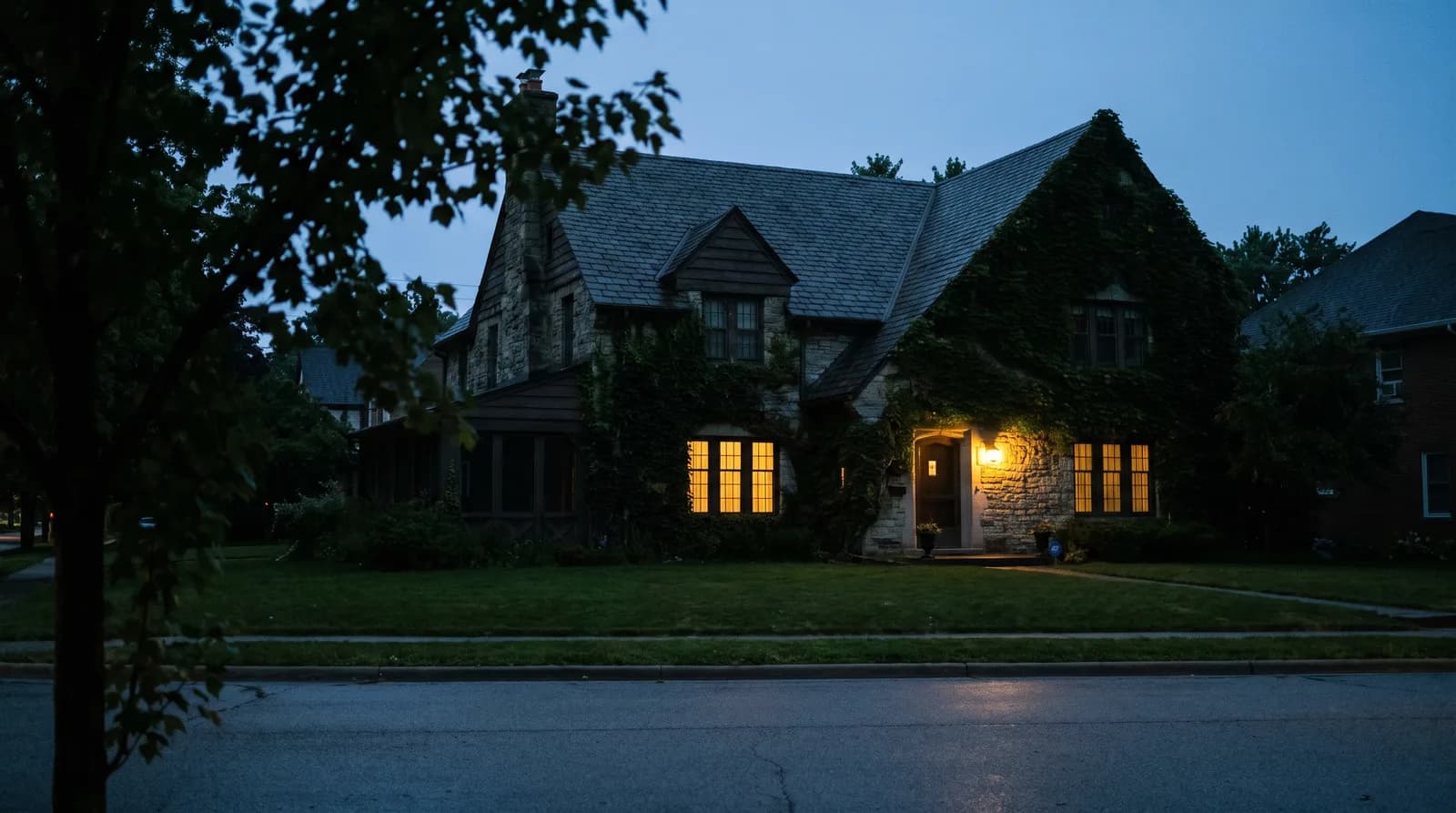
Private exclusive listings are the fastest-growing pitch in residential real estate, and here is the one fact every seller should know before hearing it: the three studies used to argue about them were paid for by an MLS, a portal, and the brokerage selling the program, and they reach three different conclusions. No academic or government study has ever measured whether selling privately gets you more or less. We checked.
We build websites for brokerages, we do not sell homes or listing programs, and nothing in this post changes what we earn. That makes us one of the few parties in this fight with nothing riding on your answer, so this is the neutral version of the explanation you are otherwise getting from someone with a stake.
What private exclusive listings actually are
Since a March 2025 change to NAR policy, "not on the open market" comes in three formal flavors.
A private exclusive is marketed only inside one brokerage's own network. Other brokerages' agents, and the search sites, do not see it. An office exclusive is filed with the MLS but not displayed to the public; Bright MLS's data put these at more than 10% of listings sold in its mid-Atlantic region over a recent six-month window. A delayed marketing listing, the new category, sits in the MLS but out of public feeds for a locally set period. All three are defined in NAR's own policy text, which is worth reading before anyone explains it to you. NAR gave every MLS "unfettered discretion" to pick its own window, and they vary: Stellar MLS in Florida chose five calendar days, while some MLSs were still deciding close to the September 2025 deadline. There is no national number, which means the first question in any pitch meeting is what your MLS's rule actually says.
Scale, to the extent anyone neutral can see it: Compass, the practice's biggest advocate, had roughly 30 to 35% of its own listings starting as private exclusives or coming-soons in early 2025, falling to about 22% by that fall after Zillow began enforcing its access rules (those figures come from an industry analyst working from Compass's own data). No market-wide count of delayed-marketing filings has been published by anyone without a stake. That gap is worth noticing: the parties fighting over this practice publish numbers; nobody neutral is counting.
The pitch, in the seller's ear
Compass's own materials make the case plainly, and it deserves a fair hearing. A private exclusive, in its words, "lets you test price, gather insights, and build anticipation before going public," with "no days on market, price drops, or a rushed timeline," and lets you "maintain privacy" by sharing photos "only within our trusted network." The three-phase strategy moves from private to coming-soon to public, with each step framed as reducing risk.
Strip the marketing and there are three real claims: a price tested privately does not accumulate visible history; privacy has value for some sellers; and early exposure to a network builds demand. The privacy claim needs no study, and for a public figure or a sensitive situation it can be decisive on its own. The other two are empirical claims about money. So what does the evidence say?
The dueling studies, and who paid for each
Bright MLS with Drexel (2024)
Bright MLS (2025)
Zillow (2025)
Compass (2026)
| Study | Who paid | Headline claim | Basis |
|---|---|---|---|
| Bright MLS with Drexel (2024) | Bright MLS, an MLS | Full MLS listing brought 17.5% more, roughly $53,890 in 2022 | 1M+ mid-Atlantic sales, 2019 to early 2023, regression |
| Bright MLS (2025) | Bright MLS | No price benefit for office exclusives, and they took 37 days to contract vs 20 | 100,000+ sales, Sep 2024 to Feb 2025 |
| Zillow (2025) | Zillow, a portal | Off-market homes sold 1.5% less nationally, 3.7% less in California | Closed sales in 46 states, 2023 to 2024, methodology not public |
| Compass (2026) | Compass, the brokerage selling the program | Pre-marketed listings closed 4.6% higher | 70,809 of Compass's own transactions compared with other Compass transactions |
Every row has the same problem. An MLS's business depends on listings flowing through the MLS. A portal's revenue depends on listing volume and traffic. A brokerage's growth strategy depends on selling its private network. Each study's conclusion points exactly where its funder needs it to, they use different populations, time windows, and controls, so they are not even comparable, and Compass's compares its own listings only against its other listings, with its own materials noting a reported opposite result in at least one region and a disclaimer that it makes no warranty as to accuracy. None of this proves any of them wrong. It means no seller should treat any of these percentages as a fact about their own sale.
One number in this entire debate has no commercial funder behind it. A 2012 peer-reviewed study by Tucker, Zhang and Zhu examined a Massachusetts rule change that stopped agents from resetting the days-on-market clock, using neighboring Rhode Island as a control. Homes sitting on the market when the reset ban hit sold for an average of $16,000 less than their Rhode Island counterparts. Buyers really do punish visible staleness. Which means the fear the private-exclusive pitch runs on is legitimate, and that is precisely what makes the pitch effective.
But notice what that study actually supports: pricing your home correctly before the clock starts. It says nothing about whether hiding the clock inside one brokerage's network nets you more than the exposure you gave up. That question, the only one that matters, is the one nobody disinterested has answered.
What you give up that nobody mentions
Every buyer who never saw it. A private exclusive is, by definition, invisible to buyers working with every other brokerage and to everyone searching the public sites. The premise of an auction, which is what a sale is, is that more qualified bidders produce better outcomes. The burden of proof sits on whoever claims that shrinking the bidder pool helps you, and as the table above shows, the only parties offering that proof are selling the program.
Your benchmark. When your home sells inside one brokerage's network before outside agents ever see it, there are no competing outside offers to compare against. You cannot know what the open market would have produced, and neither can anyone else. This is an inference from structure, not a measured statistic, and we label it as such, but it is the inference your own lawyer would make.
A conflict check. When the same brokerage produces both the listing and the buyer, it stands on both sides of the deal. No one has published data on how often private exclusives close in-house, which is itself telling, but the structural incentive is not in dispute: an analyst modeling Compass's economics estimated that even small increases in in-house transactions are worth tens of millions across the company. Dual representation is legal with disclosure in most states and banned in some. Ask the question directly.
Equal access. The one other disinterested finding in our research is a 2018 academic study by sociologist Elizabeth Korver-Glenn, which found pocket-listing practices channeled "disproportionate, exclusive access to housing" toward white buyers and sellers. Fair-housing organizations have raised the same concern for years: a network nobody can see is a network nobody can audit, and the Fair Housing Act reaches conduct that makes a dwelling unavailable on a protected basis, not only the intent behind it. Whatever a private exclusive does for your price, it is worth knowing what the practice does at scale, and this is the argument NAR itself used to justify requiring public listings in the first place.
The rules as they stand
Three clocks run on any private-marketing decision in 2026.
NAR's one-day rule (the Clear Cooperation Policy, part of NAR's MLS policy) still requires a listing into the MLS within one business day of any public marketing. The delayed-marketing category bends this, but only within your MLS's chosen window, and the Justice Department's position is genuinely nuanced: it has said it "has not taken a position" that the policy standing alone is anticompetitive, while a 2024 court opinion recorded its view that the policy "restricts home-seller choices." Both statements are real; anyone quoting only one is selling something.
Zillow's access standards, in force since mid-2025, exclude listings publicly marketed more than a business day before MLS entry, with the block lasting the life of the listing agreement after a third violation. A truly private listing that is never publicly marketed is permitted under Zillow's March 2026 clarification, but publicly advertising the existence of exclusive inventory, or gating it behind a registration wall, is not. Zillow reported about 90% of agents who received a violation notice got only one; it does not disclose how many listings it has banned.
The courtroom clock. Compass dropped its suit against Zillow in March 2026 after a judge denied its injunction. Its antitrust case against the Northwest MLS survived dismissal and was calendared for trial in June 2026, with the MLS countersuing; as of our last verification no outcome had been reported, so check before you rely on it. New York's attorney general opened an antitrust investigation into Compass after its Anywhere acquisition, and in Chicago a judge ordered the local MLS to restore Zillow's data feed. The ground under all of these rules is actively moving.
Eight questions to ask before you sign
- What is our MLS's exact delayed-marketing window, in writing?
- If I start private, can I move to the full MLS at any time, and does anything in this agreement or its term change if I do?
- What disclosure am I signing that waives public marketing, and what does it say I am giving up?
- If a buyer comes from inside your brokerage, who represents me, what happens to the commission, and is dual representation legal in this state?
- How many private exclusives has this office sold in the last year, and how many later moved to the open market? (In Bright's region, roughly 90% did.)
- Will starting private trip Zillow's access standards for my listing later, and who bears that risk?
- What, specifically, is the evidence this nets sellers more here, and who produced it?
- What would you advise if the same house belonged to your mother?
A good agent answers all eight without flinching. The eighth is the one that matters.
Where this leaves a seller
Privacy is a real reason, and if you need it, a private exclusive is the tool and no study is required. Testing price is a real fear with real academic evidence behind it, but the evidenced remedy is pricing well, not hiding the clock inside the network of the party that profits from keeping your listing in-house. And every percentage you will be shown in the pitch, in either direction, was produced by someone with a stake.
This post exists because our clients, new and independent brokerages, compete on being straight with sellers, and the sameness of interested-party content is exactly what we build against. If you are a broker who wants your site to say something this honest under your own name, that is what we do. If you are a seller, take the eight questions to the meeting.